How to Clean a Cat Water Fountain (and How Often) | Animal How To
How to Clean a Cat Water Fountain (and How Often)
·
Some links on this page are affiliate links. If you buy through them, we may earn a commission at no extra cost to you. Read our affiliate disclosure.
A cat water fountain only encourages drinking while the water is fresh and clean. Left too long, fountains grow a slippery film of biofilm and, in hard-to-reach spots, mould — and a cat will simply stop using it. The good news is that keeping one clean is a short, simple routine, especially if you chose a fountain with parts that come apart easily.
This guide gives you a plain weekly schedule, a step-by-step clean, and advice on filters and mould. If you are still choosing a fountain, our best cat water fountain picks favour models that are quiet and dishwasher safe.
Why fountains need cleaning
Moving water is fresh, but a fountain is still a wet, dark, warm-ish place — ideal for biofilm, the slimy layer that builds up on any surface that stays wet. Biofilm itself is not usually harmful, but it can harbour bacteria and it puts cats off. Plastic fountains scratch, and those scratches trap film that no amount of rinsing removes. Stainless steel and glass stay cleaner and do not hold smells.
How often to clean
Daily: top up with fresh water. Give the bowl or trough a quick rinse in the sink.
Weekly: fully disassemble and wash every part, including the pump, in warm soapy water (or the dishwasher if the parts are dishwasher safe). This is the routine that keeps a fountain healthy.
Monthly: a deeper clean — soak the pump in a 50/50 mix of white vinegar and water for 15 to 30 minutes, then rinse, to dissolve mineral scale.
Filter: change it as the maker recommends — usually every 2 to 4 weeks, or sooner in a multi-cat home. A clogged filter slows the flow and dulls the water.
Step-by-step weekly clean
Unplug the fountain (safety first — never clean it while it is powered).
Take it apart. Remove the lid, tray, spout and any filters and sponges.
Tip the old water away and rinse every part under warm water.
Wash in warm soapy water, using a soft brush in corners and around the pump intake to lift film. If the parts are dishwasher safe, use the top rack.
Clean the pump. Open the pump housing and remove hair and debris from the impeller — this is what usually silences a noisy pump.
Rinse everything thoroughly so no soap remains.
Reassemble with a fresh or cleaned filter, and refill with fresh water.
Plug it back in and check the flow.
Choosing a fountain that is easy to clean
If cleaning is the part you dislike, the single best decision is to buy a fountain designed for it. Look for:
Parts that separate without tools.
Dishwasher-safe components.
Glass or stainless steel rather than plastic.
A pump you can open to clear hair.
Filters that are cheap and easy to reorder.
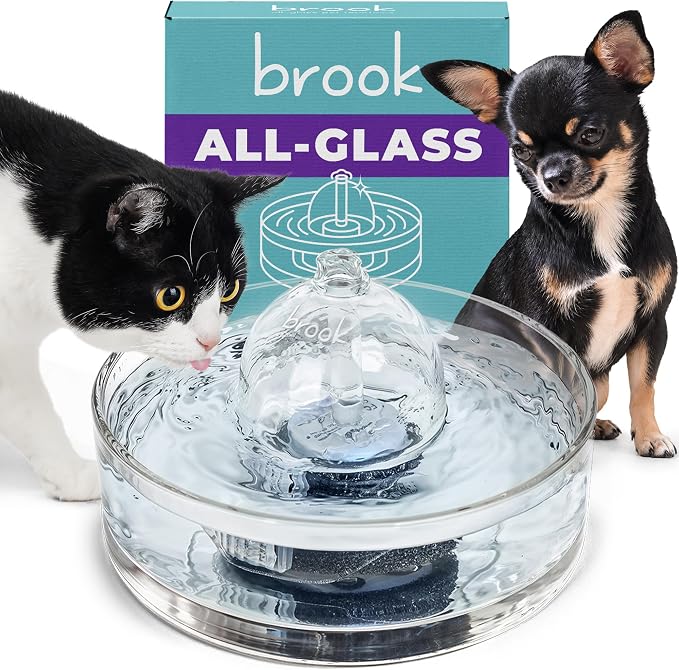
The glass fountain below is the easiest we found to keep clean, because the glass parts lift straight out for the dishwasher:
Best Easy To Clean
Brook Glass Cat Water Fountain 90oz – Dishwasher Safe Pet & Dog Fountain
Brook · 4.50 (744) ★
The easiest fountain to keep clean: glass parts lift out for the dishwasher, so slime has nowhere to hide.
Do not let the fountain run dry or sit with old water.
Wash weekly — bio-film returns fast in warm weather.
Soak mineral scale with white vinegar monthly.
Replace plastic parts (or the whole plastic fountain) once they are scratched.
Keep the fountain out of direct sun, which speeds up growth.
If you see black spots in spots you cannot reach, replace that part.
My cat stopped using the fountain
If your cat turns its nose up at a clean fountain, the water or the fountain may still be the problem — noise, a deep spout, or a spot it dislikes. For a troubleshooting plan, see how to get a cat to drink more water. Often a good clean, a fresh filter and a quieter spot bring the cat straight back.
FAQ
How often should I clean a cat water fountain?
Rinse daily, wash all parts weekly, and do a monthly vinegar soak for scale. Change the filter every 2 to 4 weeks, or sooner with several cats.
Can I put a cat water fountain in the dishwasher?
Only if the maker says the parts are dishwasher safe — many stainless steel and glass models are. Always remove the pump and any battery first; they are hand-wash only.
Why does my cat fountain get slimy so fast?
Warm water, sunlight and plastic surfaces all speed up biofilm. Washing weekly, keeping it out of direct sun and choosing stainless steel or glass all help.
How do I stop mould in a cat fountain?
Never let water sit for days, wash weekly, soak scale monthly, and replace scratched plastic. Black spots in hard-to-reach places mean that part should be replaced.
My fountain pump got noisy — what should I do?
A noisy pump usually needs hair cleared from the impeller. Open the housing, remove the debris, and soak the pump in vinegar water to dissolve scale.
The bottom line
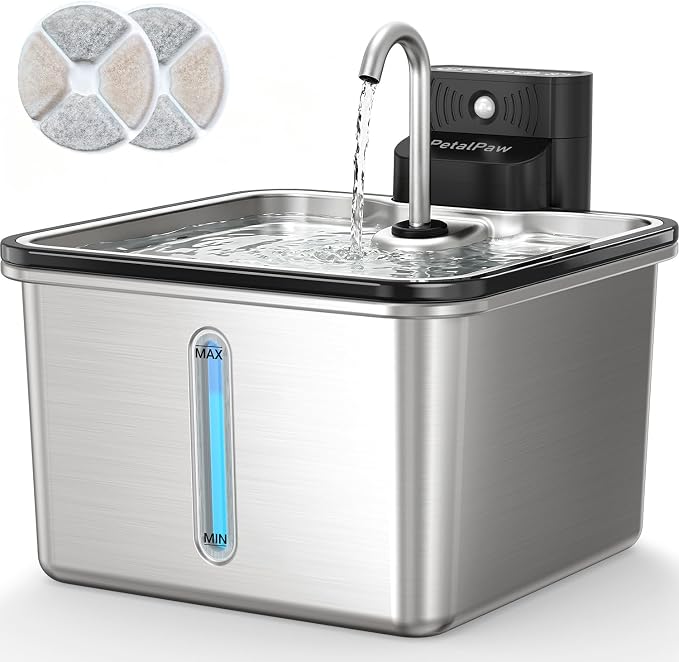
Keeping a cat fountain clean is a ten-minute weekly job: unplug, take it apart, wash every part, clear the pump, and refill with fresh water, with a monthly vinegar soak and a filter change every few weeks. Choose a fountain that comes apart without tools and is dishwasher safe — the Brook glass fountain is the easiest to clean, and a stainless model like the PETALPAW is a close second — and cleaning stops being a chore at all.
Comparison
Product comparison
Product
Best for
Price
Rating
Link
Brook Glass Cat Water Fountain 90oz – Dishwasher Safe Pet & Dog FountainBrook
We may earn a commission when you buy through links on this page.
Frequently asked questions
How often should I clean a cat water fountain?
Rinse daily, wash all parts weekly, and do a monthly vinegar soak to remove scale. Change the filter every two to four weeks, or sooner in a multi-cat home.
Can I put a cat water fountain in the dishwasher?
Only if the maker says the parts are dishwasher safe — many stainless steel and glass models are. Always remove the pump and any battery first, as those are hand-wash only.
Why does my cat fountain get slimy so fast?
Warm water, sunlight and plastic surfaces all speed up biofilm. Washing weekly, keeping the fountain out of direct sun and choosing stainless steel or glass all help.
How do I stop mould in a cat fountain?
Never let water sit for days, wash the parts weekly, soak scale monthly with vinegar, and replace scratched plastic. If you see black spots in hard-to-reach places, replace that part.
My fountain pump got noisy — what should I do?
A noisy pump usually needs hair cleared from the impeller. Open the housing, remove the debris, and soak the pump in vinegar water to dissolve mineral scale.