Cat Not Drinking Water: How to Get a Cat to Drink More | Animal How To
Cat Not Drinking Water? How to Get a Cat to Drink More
·
Some links on this page are affiliate links. If you buy through them, we may earn a commission at no extra cost to you. Read our affiliate disclosure.
If your cat seems to drink very little, do not panic — but do act. Cats are descended from desert hunters and have a naturally low thirst drive, so many drink less than they should. The good news is that a few simple changes, most of them free, often make a real difference.
This guide is a plain, practical plan for encouraging a cat to drink more. If you would rather start with the easiest single fix, a moving-water fountain is usually it — see our roundup of the best cat water fountain picks.
How much should a cat drink?
A rough guide is about 3.5 to 4.5 fluid ounces (100 to 130 ml) of water per 5 pounds (2.3 kg) of body weight each day. A typical 10-pound cat drinks around 7 to 9 ounces. Much of that can come from wet food, so a cat on wet food may drink less from the bowl and still be fine.
When to call the vet
See a vet promptly if your cat:
Drinks a lot more than usual, or a lot less, for more than a day or two.
Has dry gums, sunken eyes, or seems weak or wobbly.
Is not eating, is vomiting, or is straining to urinate (especially male cats — this is an emergency).
Suddenly changes drinking habits with no other explanation.
Sudden changes in thirst can signal kidney disease, diabetes or a urinary problem. Hydration is not something to guess at; if in doubt, phone your vet.
Why some cats drink little
Still water is boring. Cats are wired to prefer moving water, which in the wild is less likely to be stale.
The bowl is the wrong shape. Deep, narrow bowls let a cat's whiskers touch the sides, which many cats dislike.
Placement. Bowls next to food or the litter box are often ignored.
Stale water. A bowl topped up for days tastes flat.
Plastic bowls. Some cats dislike the smell or get chin acne from plastic.
Seven simple fixes that work
Offer moving water. This is the single most effective change for most cats. A fountain keeps water circulating and oxygenated, and cats drink noticeably more from it. Our picks are a good starting point.
Add more water stations. Put bowls in several quiet spots, not just one. Cats often drink in passing, not on command.
Separate water from food and litter. Move water away from the food bowl and well away from the litter box.
Use wide, shallow bowls. Ceramic or stainless steel bowls that do not touch the whiskers are the most popular. Avoid deep narrow ones.
Change the water daily. Fresh water from a clean bowl beats a top-up every time.
Make it tastier. Add a splash of warm water from a can of tuna in spring water, or a little low-sodium chicken broth (no onion or garlic). Offer it fresh and change it often.
Feed more wet food. Wet food is about 70 to 80 percent water, so it is an easy, reliable way to add moisture even for a fussy drinker.
A fountain is the fix most owners reach for first, because it works while you get on with your day:
Best Overall
Cat Water Fountain Stainless Steel: 74oz/2.2L Cat Fountain for Drinking
Neareal · 4.40 (12,754) ★
The simplest fix for many cats: moving water in a quiet, easy-to-clean stainless fountain.
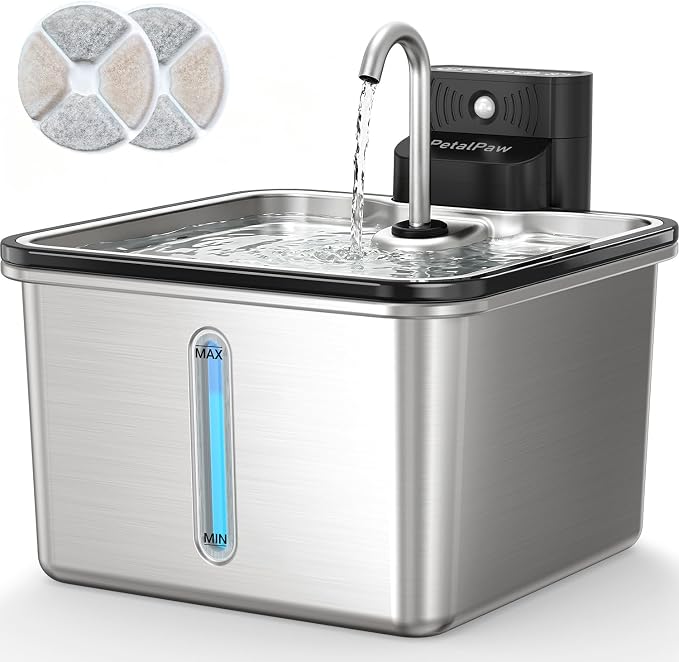
Some owners prefer a cordless fountain to avoid a cable on the floor. This rechargeable option keeps water and battery separate, so it charges away from the water and runs quietly by the cat's favourite spot:
Best Cordless
Wireless Cat Water Fountain, Water & Battery Separation, Faucet Design
PETALPAW · 4.60 (160) ★
Cordless option — good for placement flexibility and no cable for a curious cat to chew.
Whatever you use, the water is only as good as the cleaning routine. Rinse bowls and fountains daily, wash parts weekly, and swap the fountain filter on schedule. A dirty fountain can smell and put a cat off entirely. For a simple routine, see how to clean a cat water fountain.
A quick plan to try this week
Add a second water bowl in a quiet spot, away from food and litter.
Switch to a wide shallow ceramic or stainless bowl (or a fountain).
Change the water every morning, and clean the bowl thoroughly every couple of days.
Add a little tuna water or broth once or twice.
Add a spoon of wet food if your cat eats mainly dry.
Keep a note of roughly how much your cat drinks, and call the vet if it drops or spikes.
Most cats respond within a week if the water is fresh, moving and easy to reach.
FAQ
Why won't my cat drink from its bowl?
Usually because the water is still, the bowl is deep or plastic, or it sits next to the food or litter box. Try moving water, a wide shallow ceramic bowl and a separate, quiet location.
Is it normal for a cat to drink very little?
Cats naturally drink less than dogs, and wet food supplies much of their water. But a sudden drop, or signs of dehydration, need a vet — do not wait.
Do water fountains really make cats drink more?
For many cats, yes. Moving water is more appealing than still water, and owners frequently report their cats drinking more after switching to a fountain.
How can I tell if my cat is dehydrated?
Gently lift the skin between the shoulder blades; if it does not spring back quickly, or the gums feel tacky, your cat may be dehydrated and needs a vet.
Can I add milk or broth to the water?
Avoid milk — many cats are lactose intolerant. A little low-sodium broth or tuna water is fine, as long as it contains no onion or garlic, which are toxic to cats.
The bottom line
A cat that drinks little is usually just being a cat, but it is worth nudging more water in. Start with moving water, more stations, wide shallow bowls and fresh water daily — and add wet food. If your cat's thirst changes suddenly, or you see signs of dehydration, call the vet. For the gear, our guide to the best cat water fountains picks the quietest, easiest-to-clean options for older owners.
Comparison
Product comparison
Product
Best for
Price
Rating
Link
Cat Water Fountain Stainless Steel: 74oz/2.2L Cat Fountain for DrinkingNeareal
We may earn a commission when you buy through links on this page.
Frequently asked questions
Why won't my cat drink from its bowl?
Usually because the water is still, the bowl is deep or made of plastic, or it sits next to food or the litter box. Try moving water, a wide shallow ceramic bowl and a separate, quiet location.
Is it normal for a cat to drink very little?
Cats naturally drink less than dogs, and wet food supplies much of their water. But a sudden drop in drinking, or signs of dehydration, need a vet — do not wait.
Do water fountains really make cats drink more?
For many cats, yes. Moving water is more appealing than still water, and owners frequently report their cats drinking more after switching from a bowl to a fountain.
How can I tell if my cat is dehydrated?
Gently lift the skin between the shoulder blades; if it does not spring back quickly, or the gums feel tacky, your cat may be dehydrated and needs to see a vet.
Can I add milk or broth to my cat's water?
Avoid milk, as many cats are lactose intolerant. A little low-sodium broth or tuna water is fine, provided it contains no onion or garlic, which are toxic to cats.