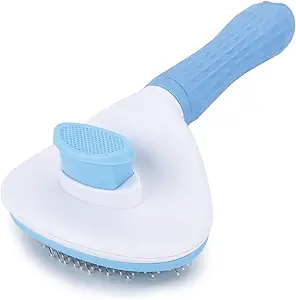
The routine (step by step)
- Start calm. Choose a quiet moment when the dog is relaxed, ideally after a walk. Have a few treats ready.
- Go with the coat. Brush in the direction the fur grows, using light strokes — let the tool do the work, never press hard.
- Work in sections. Do the back and sides first, then the chest, legs, tail and finally the face (gently, with a soft brush or your hand).
- Check for mats. Behind the ears, under the "armpits" and on the chest and legs are common spots. Work through a mat slowly, a little at a time — never yank.
- Keep sessions short. Five to ten minutes is plenty. Stop while the dog is still happy, and reward.
- Clean the brush as you go. Empty a self-cleaning brush each pass, or clear the blade, so you are not redistributing hair.
- Finish with a treat. Make grooming predictably nice, and the dog will come to you for it.
How often should you brush?
- Short coats: once a week.
- Medium coats: two or three times a week.
- Long or double coats: most days, especially in shedding season (spring and autumn).
Regular brushing is by far the best way to reduce shedding — you remove the loose fur at the source instead of finding it on the furniture.
Handling mats gently
Mats hurt, so never pull through them. Work the mat apart slowly with a rake or your fingers, a little at a time, and use a detangler if needed. If a mat is tight against the skin or the dog is in discomfort, ask a groomer or vet rather than risk cutting the skin.
If your dog hates being brushed
- Keep sessions very short and always pair them with treats.
- Use a gentler tool — a slicker with rounded tips or a soft brush.
- Brush the spots they like first (often the chest or back) and avoid the sensitive ones.
- For a nervous dog, a grooming vacuum used at a low setting on a calm dog can help some owners, but never force it.
- If brushing causes real distress or pain, get a vet or groomer to check for a skin problem.
FAQ
How often should I brush my dog?
Once a week for short coats, more for longer or double coats — most days during shedding season. Little and often is best.
Does brushing reduce shedding?
Yes. Brushing removes loose and dead fur before it lands on your furniture, so you see far less around the home. It does not stop normal shedding entirely.
What is the best brush for a dog that sheds a lot?
A deshedding blade for most coats, or an undercoat rake for thick double coats. Both reach and lift the loose undercoat.
Should I brush a dog wet or dry?
Brush dry before a bath to remove loose fur, and never brush a matted coat while wet, as water tightens mats. After a bath, brush once the coat is dry.
My dog bites the brush — what should I do?
Shorten sessions, use treats and a gentler tool, and build up slowly. A professional groomer or trainer can help if it continues.
The bottom line
Brushing a dog is simple: use the right tool for the coat, work with the fur in light strokes, go slowly through mats, keep sessions short and reward. Do it a few times a week and you will reduce shedding, prevent mats and end up with a calmer, happier dog. Next, learn how to cut dog nails to complete the home-grooming routine.